How To Start Strength Training As A Beginner
If you've never lifted weights before, don’t panic. You're not alone.
Many people know they should start strength training and they should lift weights, but feel overwhelmed about where to begin. They worry about using the equipment incorrectly, doing something dumb, not knowing how to handle free weights, looking out of place in a gym, or doing something with improper technique and getting injured.
Others simply don't know which exercises they should be doing, how often they should train, or how to make lasting progress beyond the first two weeks.
The good news is that strength training doesn't need to be complicated.
You don't need an advanced workout program, hundreds of square metres of space, fancy equipment, or years of experience. You simply need a clear starting point and a plan that matches your current ability.
Why Strength Training Matters
Most people start strength training because they want to get stronger, build muscle or lose some unwanted body fat and look better naked.
While these are great goals, strength training offers many additional benefits:
Increased strength and fitness
Greater confidence
Better posture and movement
Stronger bones
Improved joint mobility
Reduced risk of injury
Higher energy levels
More power and explosiveness
Better long-term health and independence
Whether you're 35 or 55, becoming stronger can improve almost every aspect of daily life.
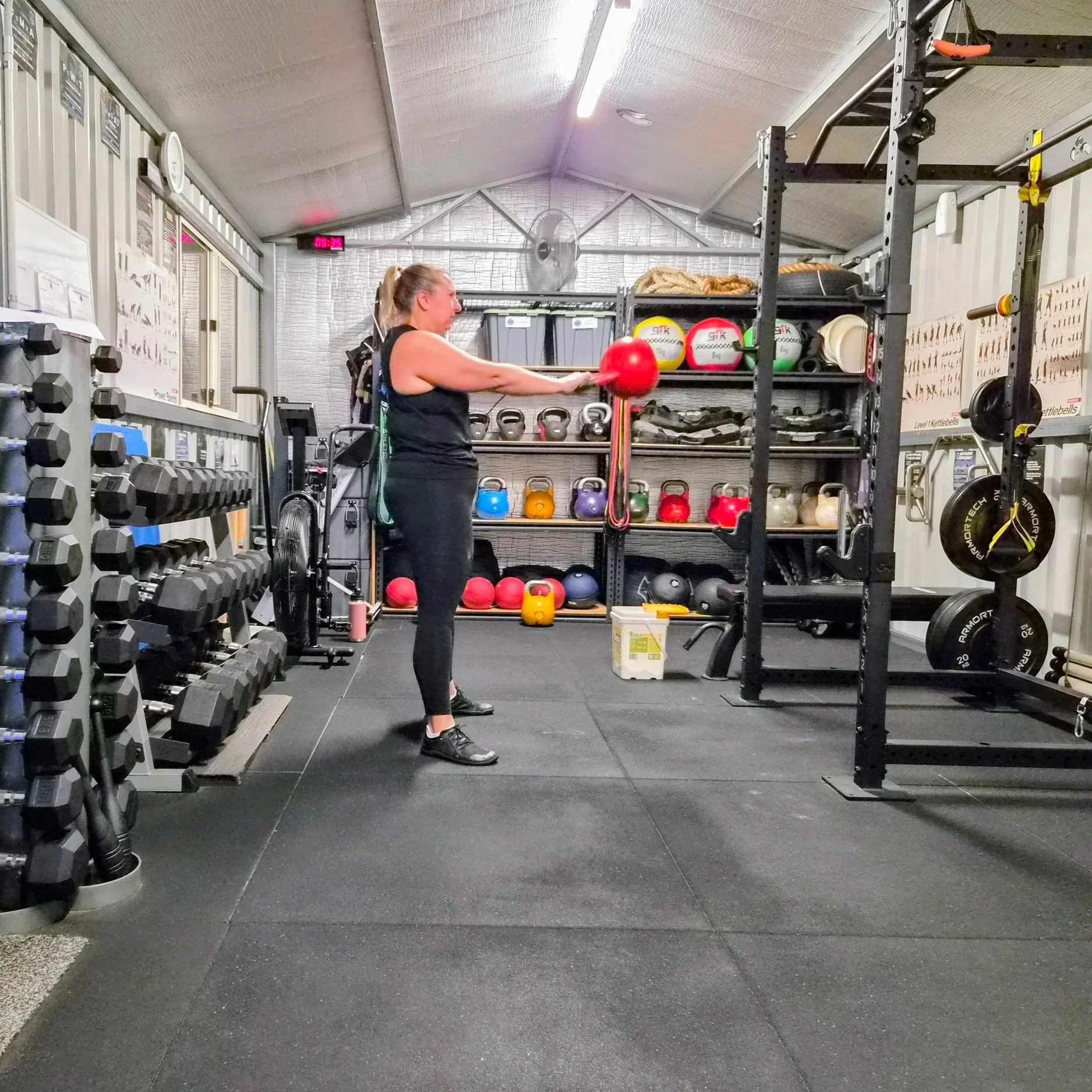
Learn The “Big 4” Fundamental Movement Patterns
Rather than trying to learn dozens of exercises or train every muscle individually, focus on mastering a few fundamental movement patterns.
These movements form the foundation of most effective strength training programs and allow you to train multiple muscle groups at the same time.
It's a more efficient way to train and helps you get more done in less time.
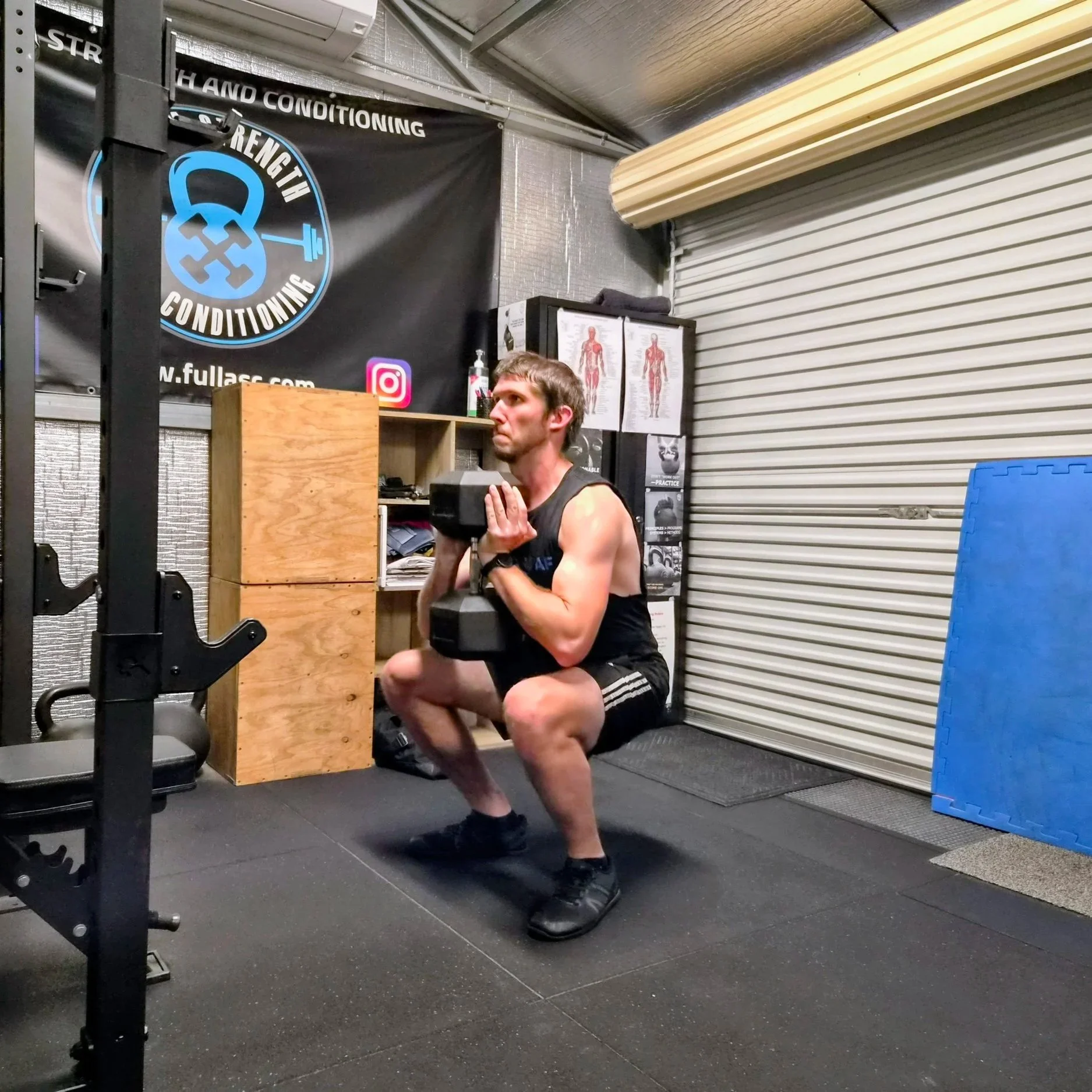
1. Squat
Examples:
Bodyweight Squat
Goblet Squat
Zercher Squat
The squat strengthens the legs, glutes, and trunk (your midsection) while improving your ability to sit, stand, navigate stairs, and move efficiently in everyday life.
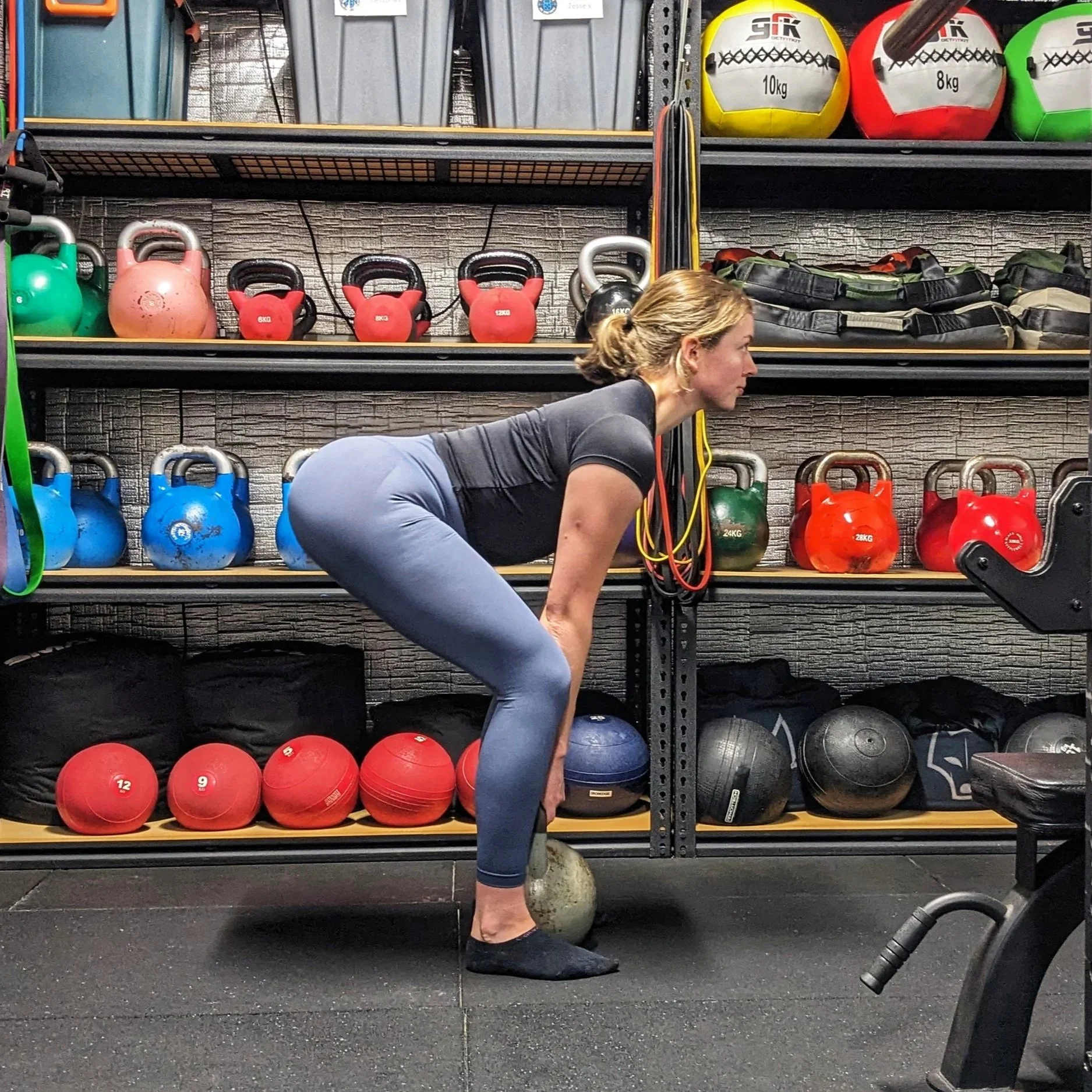
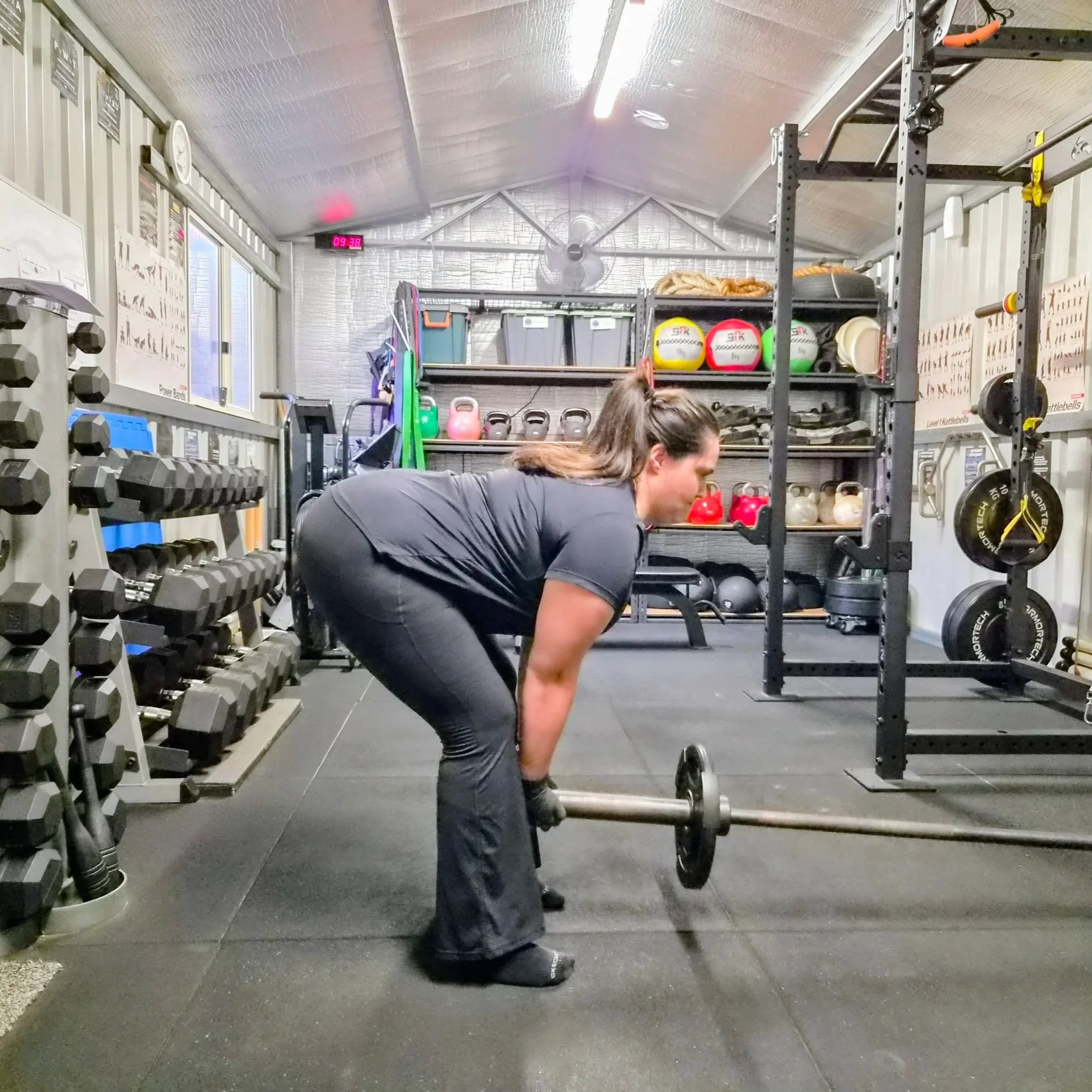
2. Hinge
Examples:
Glute Bridging
Kettlebell Swing
Romanian Deadlift (RDL)
The hinge pattern teaches you to bend from your hips — not your spine — and it strengthens the “posterior chain”, all the muscles on the rear of your body.
It strengthens your glutes, hamstrings, and lower back while teaching you how to safely pick things up from the ground.
3. Push
Examples:
Push-Up
Barbell Bench Press
Kettlebell Military Press
Push movements strengthen the chest, shoulders, and triceps.
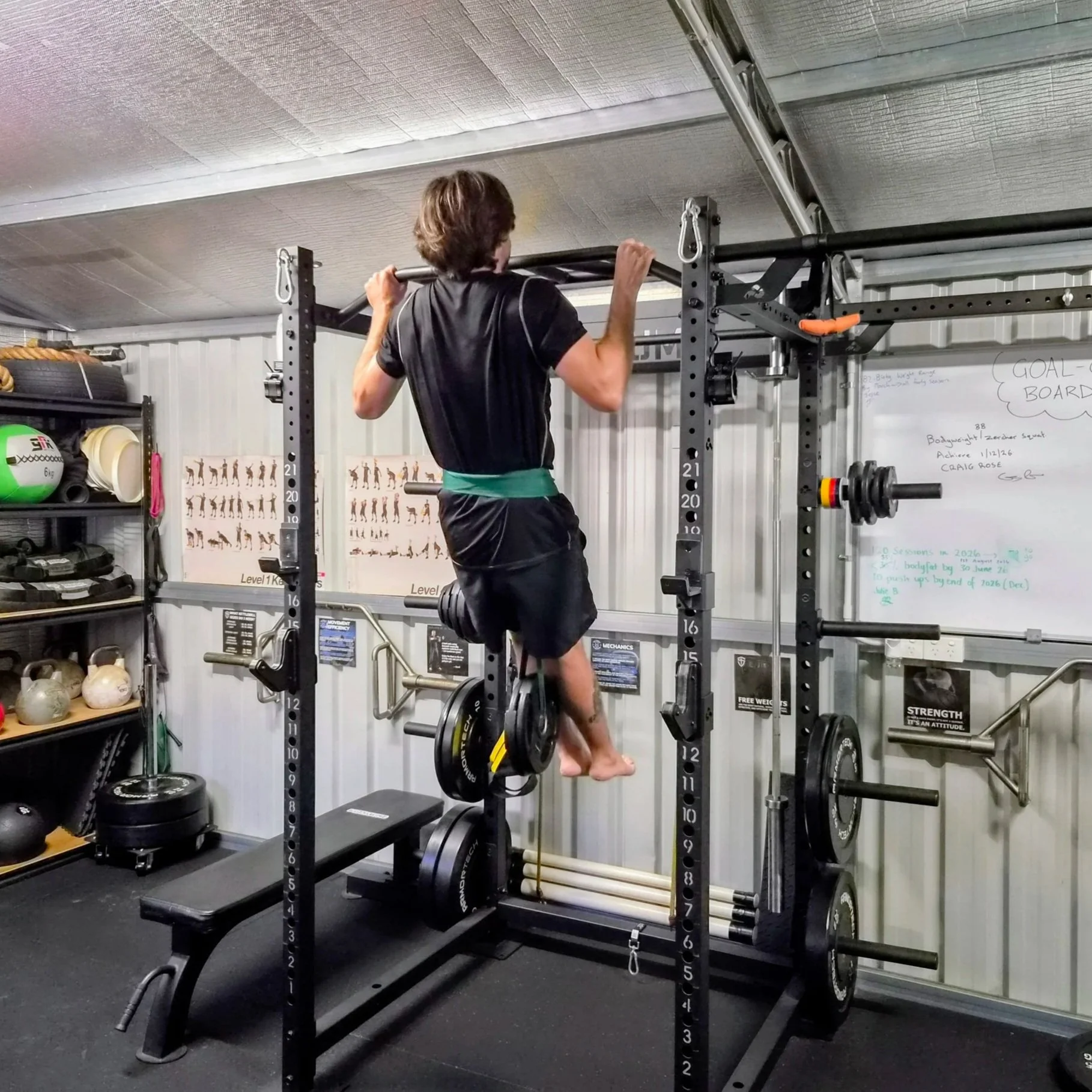
4. Pull
Examples:
Chin-ups
Barbell Bent-over Row
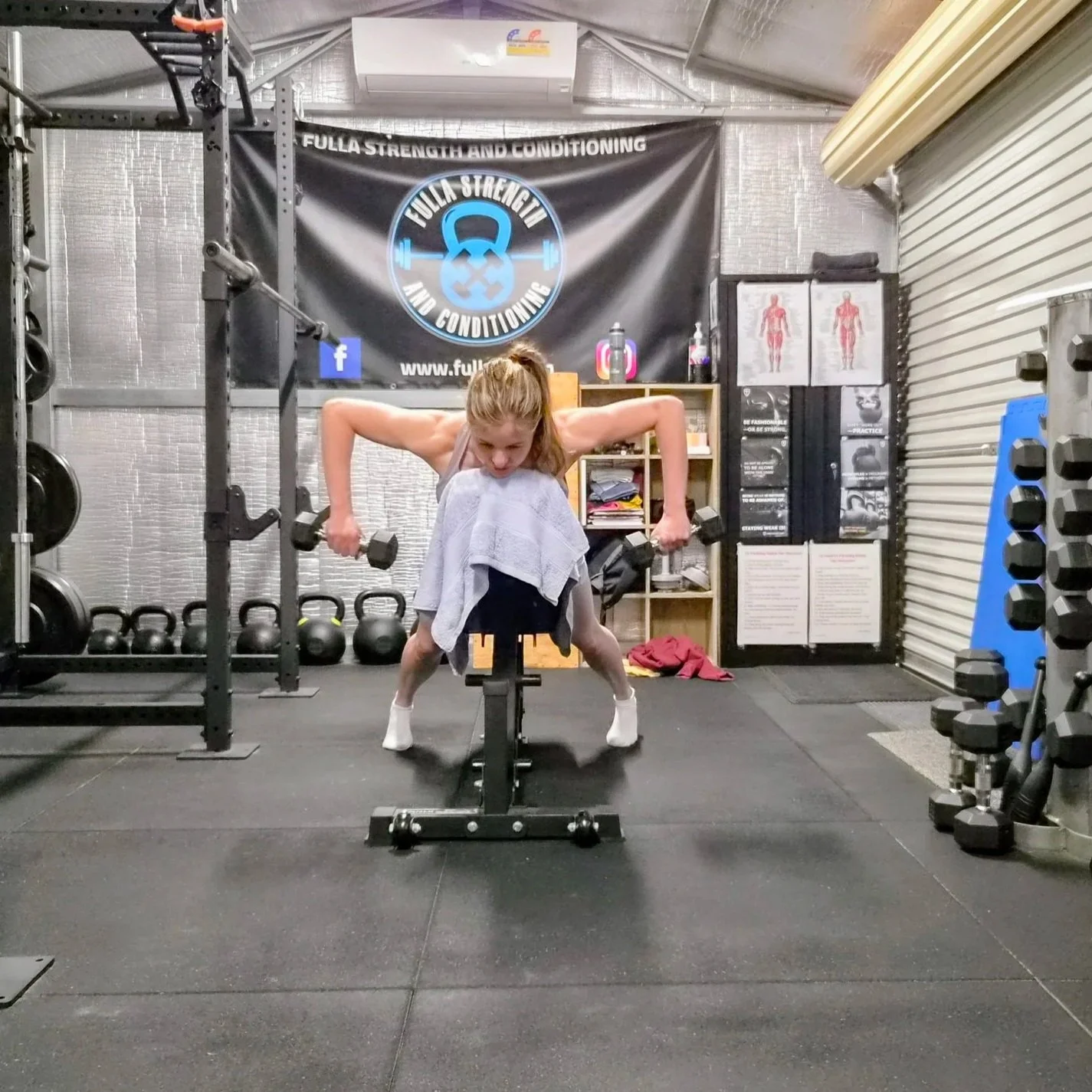
Dumbbell One-arm Row
Pulling movements work the opposite muscles to the pushing movements: your upper back, lats, biceps, forearms, and grip. The “pull” pattern is important for shoulder health, improving posture, and building upper-body strength.
How Often Should Beginners Lift Weights?
For most beginners, 2-3 full-body strength sessions per week is the ideal starting point.
This will provide you with:
Enough training to see results
Sufficient recovery between sessions
A sustainable routine for busy schedules
The motivation to keep going long after starting
Remember, the goal isn't to train as much as possible.
The goal is to train consistently.
How Heavy Should You Lift?
A common question for beginners is: "How much weight should I use?"
That is one of the keys to lasting progress: load selection. You need to choose a load that is in “The Goldilocks Zone” — not too light and not too heavy, but ‘just right’.
A simple rule is to choose a weight that feels challenging while still allowing you to maintain good technique.
You should finish a set feeling like you could perform 2 or 3 more repetitions if required.
Avoid maxing out or trying to always test your strength. Concentrate on building your strength, not testing it.
Your highest priority should be learning movement quality and building confidence with the weights.
What Results Can You Expect?
One of the advantages beginners have is that progress often comes quickly. This phenomenon is commonly known as "Beginner Gains", where significant improvements in strength and muscle mass can occur during the early stages of training.
Because strength training is new to you, your body adapts quickly to the novel challenge, often resulting in noticeable increases in strength, muscle mass, and confidence within the first 4-12 weeks of regular training.
Within the first few months of structured strength training, you may notice:
Improved strength
Increased muscle mass
Better energy levels
Improved posture
More muscle tone
Increased confidence in the gym
Greater ease performing daily activities
The key is focusing on gradual improvement rather than seeking overnight transformation.
Don't Let Confidence Hold You Back
Many beginners believe they need more confidence or a higher level of strength or fitness before they start.
In reality, confidence comes from taking action.
Every experienced lifter was a beginner once. Every single one of them!
Nobody starts out knowing everything.
The people who achieve great results aren't necessarily the most talented. They're simply the people who A) start and B) keep showing up.
Consider Starting With A Strength Assessment
If you're unsure where to begin, a Strength Assessment can provide a clear starting point.
A thorough assessment can help identify:
Your current fitness level
Strengths and weaknesses
Movement limitations
Contraindications
Appropriate starting exercises
The best training approach for your goals
Instead of guessing, you'll have a clear roadmap tailored to your needs.
Strength Training In The Kwinana Area
If you're based in Kwinana, Wellard, Bertram, Parmelia, Orelia, Medina, Calista, Leda, Anketell, Wandi, Aubin Grove, Success, Baldivis, or the surrounding area and you're unsure where to begin, a Strength Assessment can help take the guesswork out of starting your strength training journey.
Whether you're completely new to strength training, returning after a long break, or simply looking for expert guidance, a Strength Assessment can help you start with confidence. You'll leave with a clear understanding of your current fitness level, movement quality, strengths, limitations, and exactly what to focus on next to achieve your goals.
Final Thoughts
Starting strength training can feel intimidating, especially if you've never lifted weights before. But the truth is that becoming stronger doesn't require perfection.
It requires a willingness to begin and to learn what you don’t know.
Start with the basics. Focus on consistency. Learn proper technique. Be patient with the process.
Six months from now, you'll wish you had started today.